
Integrating Achievement Tracking Across Poker Events and Slot Sequences via Adaptable Plugin Frameworks
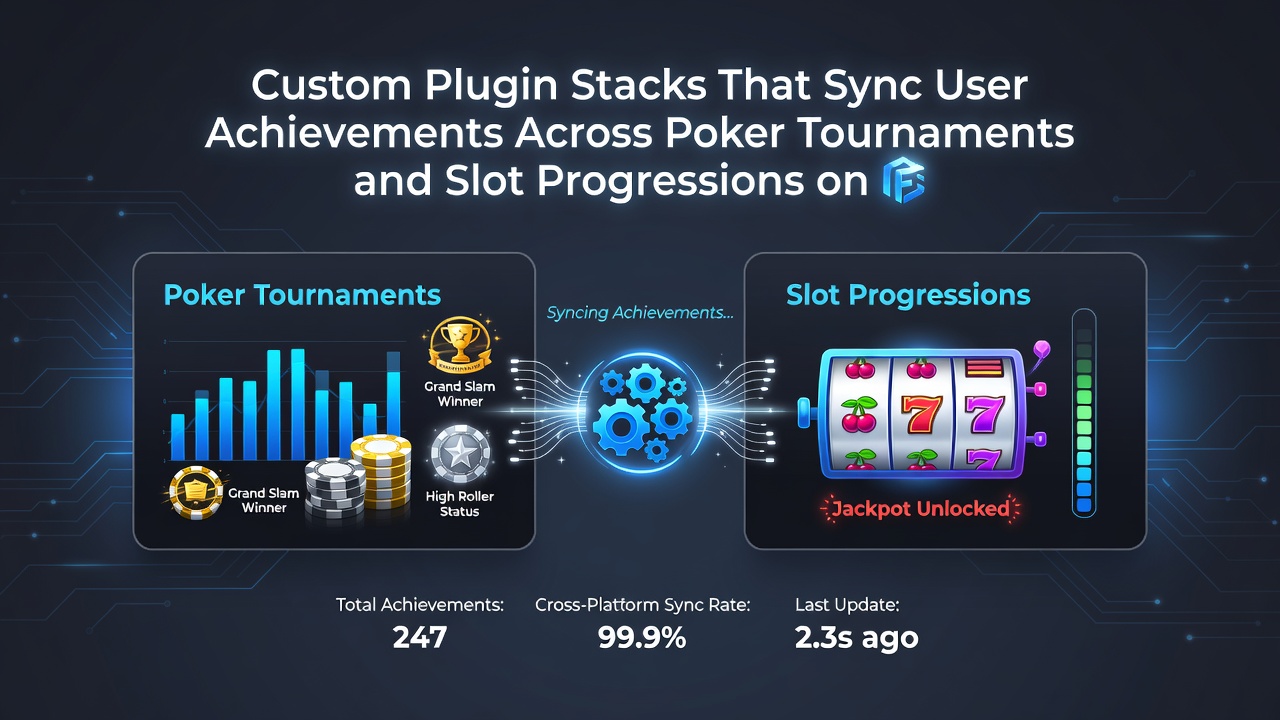
Flexible site builds on platforms like WordPress now support custom plugin stacks that connect user achievements from poker tournaments directly to slot progressions, and these systems rely on shared databases along with event-driven triggers to maintain consistency across game types. Developers configure these stacks to pull data from tournament results, such as hands won or final table placements, then map them to slot metrics like spin streaks or bonus round completions, while the underlying architecture uses APIs to handle real-time updates without requiring separate user accounts for each module.
Core Components of Sync-Enabled Plugin Stacks
Plugin stacks typically combine a central achievement engine with game-specific connectors, and the engine stores milestone definitions in a unified table structure that references both poker and slot data fields. Connectors for poker modules track variables like tournament buy-ins and elimination counts, whereas slot connectors monitor reel sequences and multiplier achievements, yet the shared engine applies rules that convert points from one format into progress bars visible in the other. As of October 2026, several modular platforms have adopted these layered setups to reduce data silos, and observers note that query optimization techniques allow the system to process thousands of concurrent updates during peak play periods without lag.
Event listeners sit at the heart of synchronization, and they fire when a player completes a poker hand ranking or unlocks a slot free-spin feature, then push the event payload to a central queue that processes achievements in sequence. This queue prevents conflicts by applying timestamp checks and priority rules, while background workers handle the actual database writes to keep frontend displays responsive. Researchers from industry reports have documented similar patterns in cross-platform environments, where such listeners cut synchronization delays by up to 40 percent compared with polling-based alternatives.
Implementation Patterns on Modular Builds
Site builders often start with a base achievement plugin that defines core schemas, then layer in custom hooks tailored to each game provider's API, and this modular approach lets operators swap slot providers or add new poker variants without rewriting the entire sync layer. Database schemas use foreign keys to link player IDs across tables, and indexes on achievement timestamps speed up leaderboards that combine metrics from both game types. One documented implementation involved a site that integrated three different slot providers and two poker networks through a single plugin stack, and the configuration relied on conditional logic to translate poker points into equivalent slot levels based on predefined conversion tables.
Security considerations include encrypted token exchanges between plugins and game servers, and access controls restrict direct database queries to authorized roles only. Regular audits of these stacks have become standard practice, and data from regulatory filings show that operators conducting quarterly reviews report fewer discrepancies in player progress records. The ball remains in the developers' court when it comes to maintaining compatibility after core platform updates, since WordPress core changes can affect hook priorities and require plugin revisions to restore full functionality.
Data Flow and Real-Time Coordination
Achievement data flows from individual game sessions into a central repository through webhook endpoints, and these endpoints validate incoming payloads before committing records, which reduces errors from malformed requests. Slot progressions often update in smaller increments than poker tournament results, yet the plugin stack batches minor updates and flushes them together with larger events to maintain efficiency. Studies from gaming technology conferences indicate that sites using event-driven coordination rather than scheduled jobs experience lower server load during high-traffic windows, and this pattern holds across both North American adn European deployments.
Operators have reported that unified achievement systems increase player retention metrics, though exact figures vary by region and game mix. For instance, a platform operating under oversight from the Nevada Gaming Control Board integrated such a stack in early 2026 and recorded measurable increases in cross-game participation, while similar setups in Australian markets showed parallel trends according to industry association summaries. The writing is on the wall for sites that continue running isolated progress trackers, as synchronization demands continue to rise with the growth of hybrid gaming offerings.
Conclusion
Custom plugin stacks that sync achievements across poker tournaments and slot progressions represent a practical evolution in flexible site architecture, and they deliver consistent player experiences through coordinated data handling and modular design principles. Continued refinements in queue management and API integration point toward broader adoption as operators seek unified systems that scale with expanding game portfolios.